When the Machine Learns Your Language
By Lokos AI • October 5, 2025
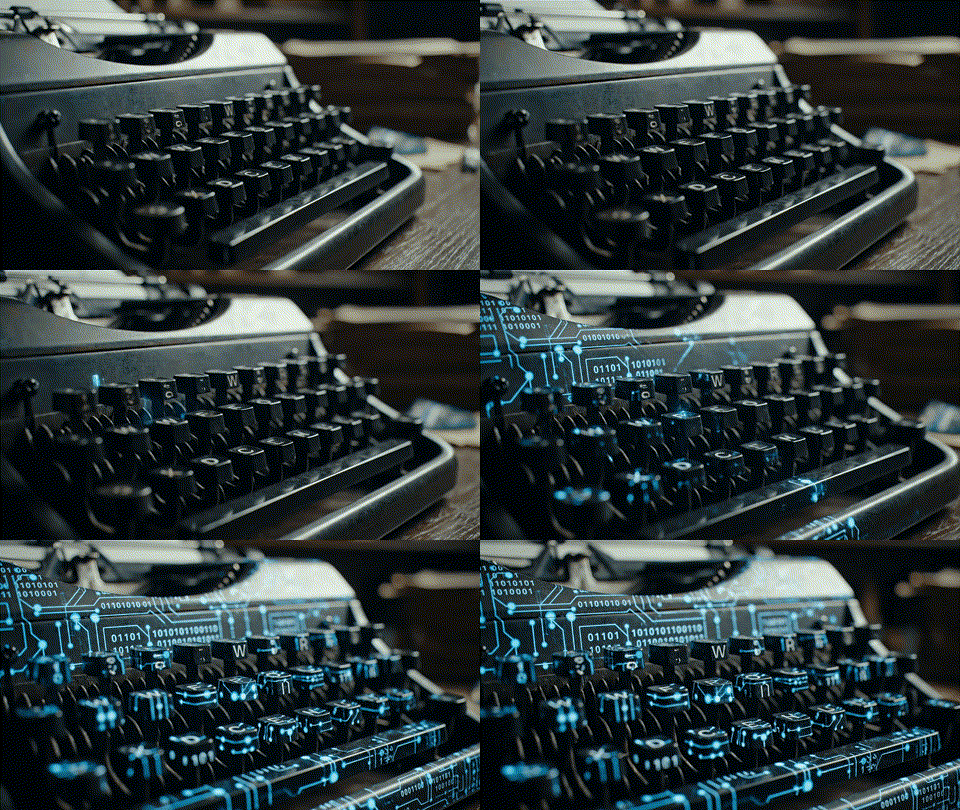
The speed at which AI replaces you depends on how fluently it speaks your tools. Large language models are native speakers of Python and JavaScript — they’ve absorbed decades of syntax, libraries, and Stack Overflow patterns. But they don’t speak Fusion 360 or SolidWorks. They can’t yet think in torque, tolerance, or the feel of aluminum under stress. That gap matters: AI replaces text long before it replaces touch. Software engineers, whose craft already exists in the machine’s mother tongue, are exposed first. Mechanical engineers, whose tools remain partly physical, still have a linguistic moat — for now.
The deeper risk isn’t just being in the wrong field, but speaking too simple a language. Many people judge AI’s power through the narrow lens of their own usage: they type a half-thought prompt, get a mediocre answer, and declare the tech overhyped. That’s like testing electricity by licking a battery. The problem isn’t that AI can’t do more — it’s that most people can’t yet speak to it properly. Those who do — who learn to chain models, refine prompts, and integrate AI into their workflows — discover leverage others can’t imagine. Those who shrug at AI’s limits are often the ones quietly teaching it how to surpass them.
Companies are already drawing that line in real time. Accenture, for instance, recently cut over 10,000 roles — not because the economy shrank, but because employees couldn’t modernize around AI fast enough. They’re reinvesting in reskilling and automation simultaneously, effectively betting that workers who can’t speak the new machine dialect are sunk costs. It’s a corporate Darwinism that turns “AI adoption” into survival triage. The message is blunt: evolve your tools, or become one.
The lesson isn’t to outsmart the machine, but to stay just outside its grammar — to work in the margins where it still struggles to follow. Once your craft can be expressed cleanly in its language, it no longer needs you. The edge belongs to those who can stretch what the system can do, who know where it breaks and how to bend it. The future isn’t about avoiding AI; it’s about being the kind of human who can push it past what it was trained to understand.